I have a friend who has enjoyed hosting international visitors in Tokyo in her
own condo.
She has been hosting international visitors in her spare two-bedroom apartment
but will have to stop it because her building association (管理組合)has decided to
ban the minpaku business ahead of the law’s
enactment in June 2018.
She was able to meet many different people she would have not met otherwise.
A lot of foreign friends have been asking me a question about minpaku (民泊、private lodging) in Japan.
Today I am going to discuss the basic knowledge about minpaku and minpaku law
set by the government in 2016.
How does the new minpaku law work ?
What is the implication on the real estate industry ?
Buying Real Estate
High yielding, guaranteed rent should be too good to be true ?: ‘Kabocha no basha’ subletting problem in Japan

Pitfall of sub-leasing(sub-letting) real estate investment
High yielding, guaranteed rent(sub-leasing) should be too good to be true ?
Recently one of the scandals which rattled the industry is KABOCHA-NO-BASHA
(Pumpkin Carriage) problem.
The background of the scandal is as follows.
Investors were guaranteed a fixed monthly amount over an extended period if they invested money by contracting with a real estate company called Smart Days(Tokyo)
that used the funds to set up and manage share house facilities under sub-leasing agreement.
Since 2015, Smart Days, operator of women-only share houses called Kabocha no Basha (Pumpkin Carriage), has promoted high yield investments through the media and has mainly acquired customers of office workers. In the sub-leasing contract, rent payment collected through the sub-leasing is sought to pay back the debt for a long period plus small profit.
For example, suppose you borrow 100 million yen from a bank and the monthly repayment amount is 500,000 yen, if you earn rental income of 550,000 yen a month, it will generate 50,000 yen a month profit. This system is typical leveraging in the real estate investing and there is no red flag about it.
In an ideal setting, Smart days as the sub-leasing company would rent out rooms to tenants and bring in a steady and continuous supply of rent, a portion of which would go to the investors.The shared house with shared toilets and bathrooms is not as wide as 7 m² in living space, but the initial cost of moving in is kept low (so they say), and it was expected that more women moving into Tokyo from rural cities will choose to stay in these share houses.Smart days also promoted the business to support tenants finding a job (This is an alarming part)
Hidden Defects : Risks in private real estate investment in Japan (Part1)

There are risks associated with any investment – loss of capital, finance, leverage and liquidity risks and so on.
Not like buying the paper assets such as REITS, many of these are only relevant to the direct investment (where the investor invests, owns and has control over the real estate asset).
This article will highlight the main risks associated with investing in real estate in Japan and provides commentary on how to analyse and mitigate these risks.
Today I am going to discuss the risks at time of acquisition.
Unlike regulated industries such as accounting and financial planning, working for a property company (as distinct from working as a traditional real estate agent),
does not require a great deal of education, experience, or study prowess. Marketing investment property requires nothing really but the ability to sell.
That is one of the reasons why there are unlicensed (often rogue )
‘property consultants’ in Japan.
Engaging in the marketing activity to lure the investors without holding a license is against the
Building Lots and Buildings Transaction Business Law. If your consultant or agent do not hold
the license, your contract is not protected by the said law.
For more information, please see my post on February 11, 2018.
Are there any rogue real estate agents in Japan ?
At the end of the day, even the good agents cannot guarantee the success of the investment and thus investors must learn the risks and returns
before they make a investment.
Good opportunities ? : How does the booming inbound tourism impact the property market ?
Japan is enjoying very healthy growth of inbound tourism.The number of inbound tourists, which stood only at 8.36 million in 2012, set record highs for the sixth year in a row. It continues to thrive as a record 28.7 million tourists visited Japan in 2017, up 19 % from the previous year. In 2016, it was up 21 % and in 2015, up 47 %.
Visitors from China, South Korea, Taiwan and Hong Kong account for more than 70 % of the total number.
The number of Chinese travelers grew 15% to 7.35 million, South Korea increased 40 % to 7.14 million.
2018 January number will be announced on February 16 but apparently it is keeping the nation on track for the government’s target of boosting the annual number of visitors to 40 million in 2020.
There are some challenges, however, that must be overcome, such as a tight supply of accommodations that cater to overseas guests and a heavy concentration of visitors from East Asia.
Further efforts should be made to realize the full potential of inbound tourism as one of the nation’s key growth industries including welcoming more American and European visitors
who have a tendency to stay longer with bigger spending budgets.
(Chinese tourists spend less than Europeans and Americans on accommodations and foods)
Japanese people are regularly talking about the latest inbound tourism booming but how does the industry look more in the global perspective ?
Is only Japan performing well ?
In order to analyze the Japan in the global market, let’s look at the 2017 report published by UNWTO (UN World Tourism Organization).
Read more
Where you should buy your house in Tokyo ?
Do you want to buy a house in Tokyo ? Which area do you want to buy your property ?
I believe understanding the location is a key to being successful
with buying a house (or apartment).
In Japanese big cities such as greater Tokyo, Osaka, Nagoya,
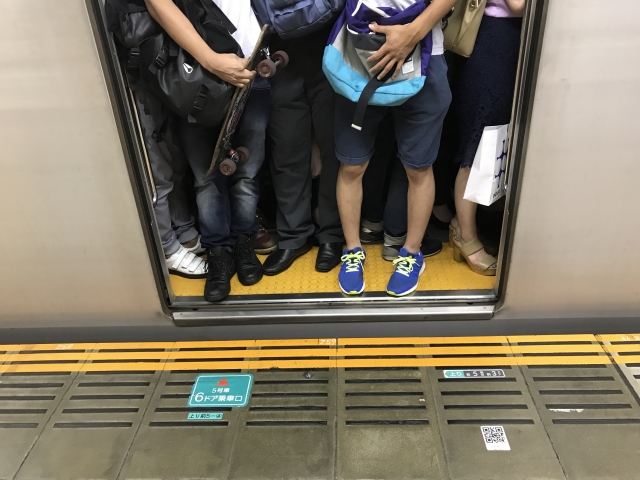
people do not commute by car but by train or subway.
They get on and off train every single day.
If the number of residents increases, the station nearby flourishes and
the vibrancy is born in the town.
On the other hand, if the number of station users decreases, we could see the
recent issues like “vacant house problem”.
Empty houses problems are even becoming serious in the area of Denenchofu station, Tokyu Toyoko Line,
which has been admired as said a prestigious residential area.
This is because the wealthy people who live in Denenchofu are moving into
high-rise apartments in the center of Tokyo.
When buying real estate in Tokyo, it is extremely important to check the trend of
passengers of the nearest station.
Unlike large cities in the US and Europe, there are few business people
who commute to work by car in Tokyo.
The convenience of commuting to work and the convenience of shopping are directly
linked to the value of real estate in Tokyo.
Read more