Real estate investment Archives - Page 15 of 18 - Yamamoto Property Advisory

Tag Archive for Real estate investment

Real Case Study : How viable is buying a property to rent in Japan ? : How to get Financing and Tax implication

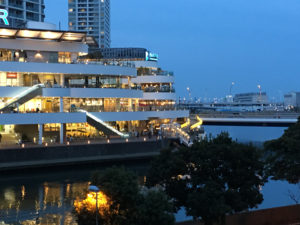
(Yokohama city center)
Evaluating Real Estate as an investment
According to an article in USA today, single-family homes in large U.S. cities have generated returns of about 9% annually on average,
according to the study, which examined results from 1986 to 2014.
Yes, there are risks in real estate investment.
Becoming a landlord isn’t without its risks — from bad tenants and periodic market slumps to changing tax laws and natural disasters
such as tsunami and earthquake.
The principle and the mechanism of the real estate investment in Japan is exactly the same

as other countries.In theory, you borrow the money at 3% from a bank and buy the real estate that generates 8% yield.
The spread (in this case 5%) is your profit.
You don’t need the rocket science.   But really ?  Let’s find out how viable it is.
In financial parlance
it is called ‘leveraging’.

Leveraging does not necessarily mean success.
Skeptics about the real estate investment in Japan where the population is
declining and rapidly ageing have lots of ammunition.
Leverage magnifies all of your returns and those returns aren’t always positive!
I
f you want to make investments where you can expect the appreciation of 20% over next 3 years,
Japan is not your destination.
Read more

You want to flip akiya (unused house, 空き家) into a rental property in Japan ? : Please do the math first


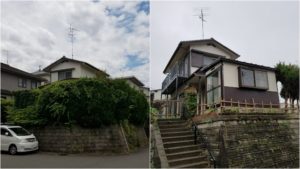
(Flipped house in Chiba city, east of Tokyo. Before and After)

* Foreigners can buy a property in Japan without having special qualification.
Who can put a price on akiya (abandoned houses,空き家) in Japan ?  You can.
There are more than 8 million distressed or abandoned houses in Japan.If you want to flip these akiya (abandoned house) into a rental property, there are quite a few opportunities out there. Akiya in Japan is a big social issue as akiya can generate serious security issues like fire, weeds, pests and burglars. Investing in akiya in a sense solves social these issues.You can find the possibilities of getting a great deal very quickly at relatively small risk exposure. But you have to find a right property in a right location.
Here is how it works
In real estate business, you probably make your money when you buy a property not when you sell it. If you don’t buy the property at the right price and/or terms, then there won’t be any good profit when you sell it.The same phrase can be applied to your home.Even if your initial plan was to live in a property (your home that is) for a long time, life is full of unexpected ventures and you may have to sell it in the future.The real estate is contained in the relatively low liquidity dimensions compared with other financial assets such as stocks, bonds and the transaction costs are high.Thus you want to be very careful when you buy a property.This is true for investors to flip a property.
Usually house flipping in the US is referred as a short-term strategy i.e. buying and renovating a house and sell it at higher value in the short term. A flipper usually needs to get out in less than six months.However, in Japan, it is not a very common style.Today I am illustrating a Japanese style house flipping; flipping akiya (abandoned house, 空き家)into a rental property.You don’t have to stick to akiya for flipping but they are naturally very affordable to come by.One of our business partners is actively investing in akiya (abandoned house).Here’s a simple strategy we usually recommend for flipping akiya into a rental property.
Location
We usually locate a property in suburban areas of Tokyo where you can find a decent one for flipping.
You should be able to find an appropriate property in Kansai (western Japan) areas but we don’t cover those areas simply because it is too far to visit the sites.Read more

How to avoid buying a house with problems in Japan : Tips for detecting a malicious defect in your property

While inspecting any property is important, it becomes even more uppermost to check for defects found in second-hand property especially akiya (空き家abandoned houses)
In Japan’s real estate industry, it is generally assumed that there are four types of risks of ‘defects’ (瑕疵)the industry professionals usually recognize.
They are physical defects, psychological defects, environmental defects
and legal defect (issues).

1. What is a physical defect?
Physical flaws are situations where the building leaks, termites occur, and the earthquake resistant strength is insufficient.
Some common physical issues
For example, with 8 million akiya (Abandoned house, 空き家),
old houses are usually very affordable in Japan these days. However, those old houses could also come with a lot of issues that you may not be prepared for.
What seems like a great deal at first may ultimately cost much more than you originally thought.
It is always recommended to do your research before investing in real estate, particularly when the property in question is old property.
The following checklist will give you an idea of what issues to watch out for when buying a second-hand property especially an older home.
Due diligence always pays off.
You want to avoid common physical defects, problems with the construction structure. 

Read more

A solution to the hotel shortage ? New minpaku (民泊, private lodging) law in Japan : How does it work ? and how can you tap your property ?

I have a friend who has enjoyed hosting international visitors in Tokyo in her
own condo.
She has been hosting international visitors in her spare two-bedroom apartment
but will have to stop it because her building association (管理組合)has decided to
ban the minpaku business ahead of the law’s
enactment in June 2018.
She was able to meet many different people she would have not met otherwise.
A lot of foreign friends have been asking me a question about minpaku (民泊、private lodging) in Japan.
Today I am going to discuss the basic knowledge about minpaku and minpaku law
set by the government in 2016.
How does the new minpaku law work ?
What is the implication on the real estate industry ?

Read more

Are you interested in akiya 空き家(unused house) for free in Tokyo ?:How to find a house for almost nothing in Japan ?

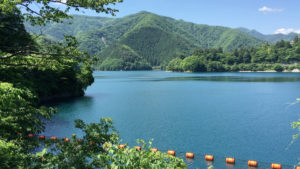
(Okutama lake in Okutama town, Tokyo)

You can find “abandoned houses”  all over Japan, due to the country’s shrinking population.
The ministry of land, infrastructure, Transport and Tourist(MLIT) reported in 2013
that about 8.2 million (about 13.5% of total) houses and apartments were empty.

*
In fact, this 8 million number which often catches media attention is very misleading.
It includes the rooms and houses for letting.
Taking the fact into account, there are about 2.2 million akiya ‘real empty houses’ (abandoned houses)
in the market. Still daunting number in deed.

One report said vacant land and homes could by 2040 be as big as Japan’s northernmost island of Hokkaido—about 83,000 sq km (32,000 sq miles), or the size of Austria.
The area is currently about 41,000 sq km, slightly bigger than Japan’s southern island of Kyushu.
Many of Japan’s 8 million abandoned homes—or akiya(空き家)—are often left empty indefinitely.
Why do we have so may abandoned houses ?

Read more

Is ‘minpaku’ (private lodging) finished in Japan ? : How is the new law affecting the real estate industry ?


The new law will be effective from June 2018 to crack down on illegal lodging
Local governments across Japan have just begun accepting applications for operating private lodging (aka ‘minpaku’ in Japanese) rental businesses under a new law going into effect in June 2018.
The law is responding to a sharp growing need for affordable accommodation amid a rapid rise in foreign tourists, while cracking down on illegal lodging.

The law is to limit the number of days per year that rooms in private homes and apartments can be rented to maximum 180.
Operators will have first obtain the certificate from the local governments and then display signs indicating the presence of rental units and manage noise and other complaints from neighbors. No-compliant operators can expect to be fined.

In the meantime, Japan’s  condominium management company association recently released the nationwide survey results on the use for private lodging in condominiums in Japan.
It is the interesting development and I quickly share the summary of the report today.

Read more

Is Kyoto still good for investment in a vacation rental ? : Two boutique guest houses


In light of the surging inbound tourists, Japanese and foreign developers and hotel companies  have stepped up construction, with names like Hyatt, Marriott, Nomura Real Estate Development and Mitsui Fodosan
building new accommodations.
We have been increasingly receiving the inquiries from overseas investors about the properties in Kyoto for vacation rentals.
Generally speaking, lots of investments money to build the hotel and private lodging are flooding in Kyoto now from both inside and outside Japan and therefore the good properties with hotel license tend change hands very quickly.
There are very attractive investment opportunities for foreign investors in Kyoto properties.
I am going to discuss the opportunities of vacation rental in Kyoto today.
Let me start with the recap on the inbound tourism market in Japan, in particular, Kyoto.
The number of foreign visitors to Japan rose 19% to a record of nearly 29 million in 2017.
The government set the road to the target of 40 million by 2020 when Tokyo will host the Olympics.
Spending by foreign visitors rose 18% to ¥4.4 trillion ($40 billion).
Tourists have transformed the face of the nation’s cities, crowding into popular destinations such as the Ginza shopping area in Tokyo, temples in the ancient capital of Kyoto and ski
areas during the winter.
For example, the number of American visitors rose 11% in 2017 to 1.24 million which accounts for about 4% of the total.
Read more

Where are the top destinations for people seeking real estate in greater Tokyo? : Two locations in Saitama stand out

(Picture: Yokohama)
Recruit Sumai Co., operator of the Suumo residential information website, recently released the ranking of locations
(and train stations) where people in the Kanto region want to reside in 2018.
(Kanto region in this report  covers Tokyo, Kanagawa, Chiba, Saitama and Ibaraki)
They released the same report for Kansai region (including Osaka, Kyoto and Kobe as well.
The survey began in 2010 and has been conducted every year.
7000 people in the Kanto area responded and they are in the
age between 20 and 49. People over 50 years old are not surveyed, which naturally distorts the statistics.
Here is the ranking for 2018 and data in 2017 and 2013 are also illustrated for a comparison purpose.

Read more

(Breaking news) New mortgage loan for the rental investment by a Japanese bank for foreign nationals

Just a quick breakthrough note :
Last week,  we have managed to establish the strategic alliance with one of the prominent Japanese banks who can offer foreign nationals loan for the investment property in Japan.
There are three categories.
1. Foreign nationals who reside in Japan with the permanent  residence
(Individuals who live in Japan without PR could be also eligible)

2. Foreign individuals who reside in Hong Hong (Hong Konger)

3. Foreign nationals who do not live in Japan

Category 2 and 3 are the breakthrough products.
No Japanese banks have been willing to offer the loan for foreign nationals who do not live in Japan but the window has just opened.
Obviously there are certain conditions such as down payment and taking out the mortgage.
And the approval is subject to the valuation of the property by the bank and financial status of each investor.
In addition, you need to carefully select a property which the bank is likely to offer the loan by meeting their criteria.

My bank is very picky about the location.

The property must be in the metropolitan cities where reasonable rental demand can be expected.

These cities are specifically Tokyo 23 wards, Yokohama, Kawasaki, Chiba, Nagoya, Osaka, Kyoto, Kobe and Fukuoka.

The property must be within 10 min walk distance from the nearest train station.

Airbnbs and hotels are excluded (meaning it must be a property to rent or your own house)

Interest rate is attractive enough to create the good cap rate.
Japan’s interest rate is historically low due to the quantitive easing by the central bank.
Anyone who is in interested in such loan, please send us a direct message via
contact us.


Toshihiko Yamamoto
Real estate investing consultant and author.
Founder of Yamamoto Property Advisory in Tokyo.
International property Investment consultant and licensed
real estate broker (Japan).
He serves the foreign companies and individuals to buy and sell
the real estates in Japan as well as own homes.
He holds a Bachelor’s degree in Economics from
Osaka Prefecture University in Japan
and an MBA from Bond University in Australia

Toshihiko’s book, “The Savvy Foreign Investor’s Guide to Japanese Properties: How to Expertly Buy, Manage and Sell Real Estate in Japan”is now out on Amazon, iBooks (iTunes, Apple) and Google Play.
About the book 
Amazon.com Link

Our YouTube channel


2020 Tokyo Olympics revamping central Tokyo

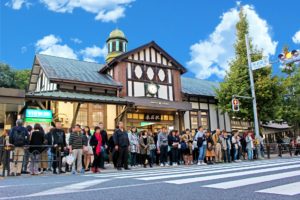
(Current JR East ‘Harajuku’ station)

Tokyo will host the Rugby World Cup in 2019 and Olympics and Paralympics in 2020.
In view of the two big events and rapid growth of the inbound tourism, In Tokyo, there are a number of revamp projects in the pipe line now.
Today I pick up one of the projects by EAST Japan Railway Company (JR East)
involving Sendagaya station which is the closest station to the new National Stadium and Harajuku Ekimae project by NTT group.

Tokyo and neighbouring cities have been developed sufficiently and in a sense have been seeing the matured status
over the years,
however, when the new development plans are revealed by the developers and the railway companies,
the real estate price in the redevelopment area picks up and price hike is likely to continue for over several years.

Read more