Buying Real Estate Archives - Page 10 of 11 - Yamamoto Property Advisory

Buying Real Estate

Akiya (unused house) for sale, 50 mins from Tokyo : Is it really a good investment ?

* Foreigners can buy a property in Japan without having special qualification.

Japan has too many houses and there are more than 8 million empty houses/rooms here (which accounts for 13% of total number of properties).  Houses that are not used for a long time is called ‘akiya’ (空き家) in Japanese or ‘Empty house’ .Some home owners are virtually sitting on the empty houses doing nothing due to various reasons. And more and more individual investors are paying attention to this akiya market. 
In the light of Suruga bank scandal, Japanese banks are generally tightening their lending stance for the individuals investors.
Their business with institutional investors, of course,  are as usual but individuals investors are facing more challenging situation.
I am beginning to see more bogus-like hyperbole ads by rogue agents to lure the naive investors.
Please be careful and skirt such dangerous investment.
Individual investors are, in fact, shifting their eyes more towards akiya investment (abandoned house) because akiya investment does not require the large cash payment and offer the relatively attractive yield (return) . We recently spotted the following two properties in Chiba prefecture (Chiba prefecture is right next to Tokyo Metropolitan)  and are happy to share the information with you.
Read more

Financing your real estate investment in Japan: Suruga bank scandal. Is it facing the risk of contraction ?

Pressure mounts to enact inquiry by FSA on other banks ?

Recently the Financial Services Agency (FSA) ordered Suruga Bank to stop extending fresh loans for real estate investment for six months, over its improper practices related to such financing.
In recent years, the FSA has strengthened its oversight of surveillance over building financing for rental houses that have spread as tax saving measures for inheritance tax. There are an increasing number of examples of building properties in areas with low rental demand and inability to obtain enough rent income assumed by increasing vacancy.
There are cases in which loans can not be repaid and leading to the foreclosures.
Those who are affluent with the upscale property have been targeted by the developers of new apartment buildings and the real estate companies.
Since around 2010, these developers and real estate companies have focused not only on loans involved in landowner’s tax saving measures but also on loans to individuals who do not own the land with limited self-funding. Then shared house scandal involving Suruga bank and Smart days (operator of shared house) exposed to the light in early 2018.Read more

Priceless Opportunity : Magnificent House in Yakushima (World Heritage) and Huge Land for sale

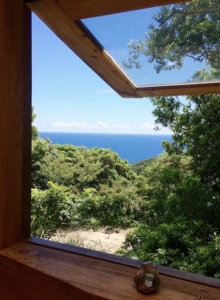
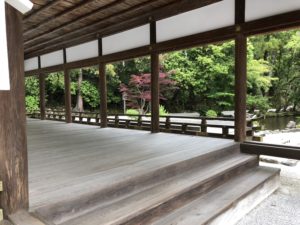
(View from the property)

***This property has been sold***


One of my good friends in the industry has just listed a beautiful house in Yakushima.

The small, remote island of Yakushima, which lies off the southern coast of the southernmost of Japan’s four major islands, Kyushu, is shaped something like the Hawaiian isle of Kauai. And just as on that other circular bit of rock over 4,000 miles away across the North Pacific, visitors arrive here seeking respite in subtropical rain forests and mountains. (from NYT)

Situated in the sacred island, this sophisticated new construction is in the exclusive Yakushima island.
The property boasts 1932 square meters of forest land and the fantastic ocean-view.
The house is compact wooden with a toilet which is equipped with the natural disintegrator system.
You don’t need the sewerage.
Read more

Buying a house in Japan ? Here’s all-too common mistakes to avoid


We don’t need to tell you about the brilliance of Japan quality: detailed, good service and competitive price etc etc.  
But for how good Japan quality in general is, it’s equally easy to screw up. Badly.
Japan’s real estate industry and construction industry are full of fraudulent companies.
A number of them are rogue (of course, there are good and trustworthy companies, too.)
You need to be very careful to deal with them.
When you build your brand-new house in Japan, you must be extra mindful because it could be a disaster if it goes wrong.
It is widely known to the industry professionals that the laws are not necessarily protecting the consumers
(customers).
Why is the owner (consumer) in so disadvantageous position ?

There are five main reasons.
1.The industry is not seeking a repeat business so they don’t look after customers well
2. High overhead cost
3. The related laws have many loopholes
4. The owner(customer) trusts the contractor  (real estate agents and builders included) too much
5. Victim’s tragic stories are not widely reported in the media.

Read more

The lure of Japan’s hidden treasures “Akiya” : Why are so many houses empty in Japan ?

Terrifying hidden crisis or treasures ?
In Japan, recycling is so much part of our culture.
And yet, it is also the norm for Japanese to demolish their houses with almost less thought than most people would give to disposing beloved ceramic bowls.
People believe homes are usually built to last 50 odd years. Japanese building culture is often described as ‘scrap and build’.
The reasons for this phenomenon range from the ageing to need for constantly updating building technology as it revolves.
With shrinking population, the result is a housing problem that is the opposite of what most countries face. Japan has too many houses that no one wants.
According to the government statistics, the number of vacant houses (空き家、akiya) in 2013 reached 8.2 million.
(But the 8.2 million includes houses/apartment units for rent that are only vacant temporarily as owners try to find tenants or buyers. So genuine empty homes that have been abandoned altogether number about 3 million)
Moreover, many who inherit a house are unable to sell them because of a shortage of interested buyers. The problem is particularly acute in rural areas.
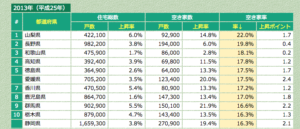
According to one statistics, the top ten ranking of akiya in prefectures as of 2013 was as follows.
(The number indicates the percentage of akiya in dwellings of  each prefecture)
In these prefectures, 1 out 5 properties are empty.

1.Yamanashi   22%
2.Nanago        19.8%
3.Wakayama   18.1%
4.Kochi            17.8%
5.Tokushima    17.5%
5.  Ehime          17.5%
7. Kagawa        17.2%
8. Kagoshima   17.0% 
9.Gunma           16.6%
10.Tochigi          16.3%
10. Shizuoka     16.3%

(top10 ranking)

Read more

THE IMPACT of NATURAL DISASTERS. Nankai Trough Earthquake : Risk in Tokyo Bay from future tsunami

Cleanup, rescue operations underway in Japan after severe rains kill over 200 people and strand thousands in the recent flooding and landslides in west Japan.

On Mar 11, 2011, a devastating 9.0-magnitude quake struck under the Pacific Ocean, and the resulting tsunami caused widespread damage and claimed tens of thousands of lives.
It also sent three reactors into meltdown at the Fukushima nuclear plant, causing Japan’s worst postwar disaster and the most serious nuclear accident since Chernobyl in 1986.
The devastating tsunami hit sites along the Tohoku coast. 
A public beach just opened in Rikuzentakata on July 20, 2018 for the first time in eight years, underscoring the destruction of sites.

In 1703, an 8.2 magnitude earthquake(Genroku earthquake) along the Sagami Trough triggered a tsunami that rippled towards Japan’s then capital, Edo. It is estimated that a couple of thousands lives were lost.
Japan has a lot of natural disasters and many foreign investors are worrying about it.
A major earthquake is expected to strike sometime along the Nankai Trough, a submarine trench running off the Japanese archipelago from around Shizuoka Prefecture in Honshu to the seas east of Kyushu.

How at risk is Tokyo Bay from future tsunami by Nankai Trough earthquake ?
The Nankai Trough is a 700-kilometer-long sea-bottom depression that runs about 100 km off the southern coast from Shizuoka Prefecture to the Shikoku region.

Read more

Flipping akiya houses dependent on knowing costs, the local housing market : What is a key to success ?

(Tokorozawa station, Seibu line)

* Foreigners can buy a property in Japan without having special qualification.
Do you want to join the small handful of people who are doing the house flipping here ? 
Maybe we have got a better solution to abandoned houses problem in Japan.
Apparently h
ome flipping investment is a lucrative and fulfilling way to make thousands of dollars within a short period of time in US. But it can also be a difficult and frustrating endeavor when things go wrong.
And things will often go wrong. I have read about the stories that investors talk about the various obstacles in their way. Flipping homes requires hard work, persistence, and a great deal of patience,
because you’ll inevitably encounter problems in the process.
What about the flipping houses Japan ?
Since there are so many abandoned houses here in Japan, can we do something similar ?
The answer is yes and no.
Let me start with the background by quoting an article in The Japan Times.

Background
The Japan Times on December 26, 2017 says “Over 8 million properties across Japan are unoccupied, according to a 2013 government report. Nearly a fourth have been deserted indefinitely, neither for sale nor rent.
In Tokyo — where 70 percent of the people live in apartments — more than 1 in 10 homes are empty, a ratio higher than in cities like London, New York and Paris.
And that figure is expected to soar in the coming decades as deaths outpace births in a super-aging society where more than 1 in 4 people are 65 or older.

Nomura Research Institute, prominent research firm, projects the number of abandoned dwellings to grow to 21.7 million by 2033, or roughly one-third of all homes in Japan.
Meanwhile the population, which peaked nearly a decade ago, is forecast to fall 30 percent by 2065, creating an ever-increasing pool of uninhabited houses.”

Read more
What is Hida-Takayama in Gifu ? Why so many Jewish people visit there ? : Will you be ready for investment in private lodging (minpaku) property ?


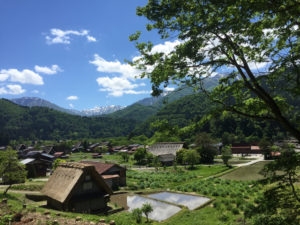
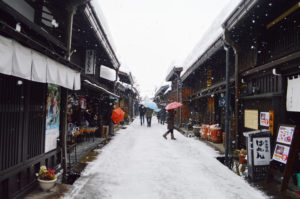
(Historic village in Hida-Takayama)

It is not secret that Japan is a surprising combination of peace and chaos, old and new and has just the right amount of anorak.
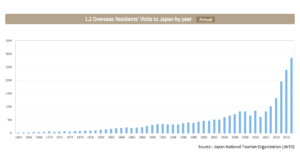
Inbound tourism continues to thrive as a record 28.7 million tourists visited Japan in 2017, up 19 percent from the previous year and apparently keeping the nation on track for the government’s target;40 million in 2020.
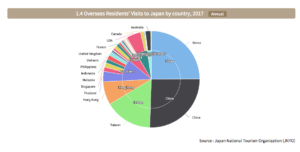
Challenges remain such as a tight supply of accommodations that cater to overseas guests and a heavy concentration of visitors from East Asia. 
According to JNTO (Japan National Tourism Organization), the estimated number of international travelers to Japan in April reached to 2.9 million with an increase of 12.5% compared to the previous year, recording the best April ever. The estimated number of international travelers to Japan in 2018 reached to 10 million (+15.4% from 2017).

(Number of Inbound tourists by year)

(Inbound tourists by country in 2017)

That said,  Hida-Takayama (飛騨高山)has become one of major tourist destinations among the foreign tourists
but it is not that popular destination for average Japanese.
I have recently read an interesting article about Israeli tourists in Hida-Takayama and would like to share the Takayama city’s
strategy how they become one of the most popular tourist places among foreigners especially Jews.
According to Takayama city statistics, the number of Israeli visitors has increased from mere 2,833 in 2013 to over 10,000 mark for the first time in 2016. The number has more than triple. 

Total number of Israeli visitors to Japan during 2016 was about 30,000 so one-third of them visited Takayama.
In 2017,  the total number of Israeli guests to Japan increased to 32,000 from previous year (up 7%)

(Chic Hida-Takayama old town village with historical kominka)
Read more

Waterfront century-old Japanese kominka (traditional Japanese folk house) in Atami, Shizuoka prefecture: How was it dismantled and transferred ?


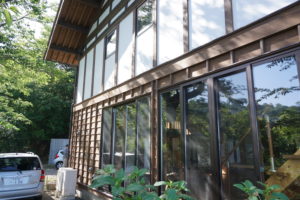
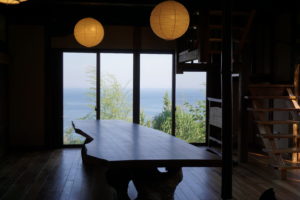
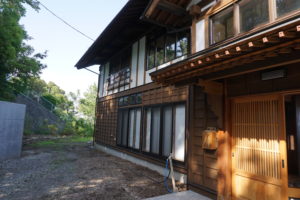
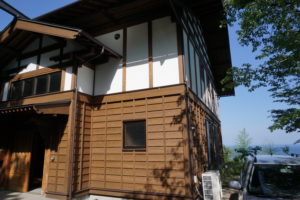
(House)                                                              (Living room with ocean view)

I recently visited a beautiful Japanese kominka (traditional Japanese house,古民家) in Atami with
a business parter who actually renovated into the perfect condition.
The house was build only in 2017 but it used the old timbers from a century-old house in Nagano prefecture.
The current owner dismantled an old house in Nagano and transferred to Atami(熱海)and restored it completely.
Here is the
traditional Japanese style house and how it is restored.
Property


It sits in Atami in Shizuoka prefecture.
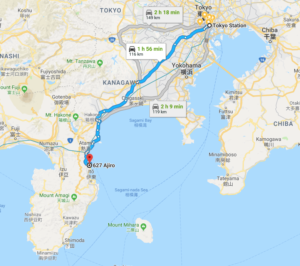
It has a great access; only 2 hours away by car from central Tokyo and about 80 km from Mt.Fuji.
It is the ocean view house where you can enjoy the sea breeze and spectacular Pacific Ocean and the Sagami Bay.
(See the map below)
Located on a high ground in good sun and good ventilation.
Land over 10,000 m2, building over 270 m2.
Front road 7.6 m and 3 parking lots (more space is available for parking lot)
The beautiful unique Japanese old folk house (called kominka ‘古民家’) sits at the foot of the Izu peninsula.
The grand waterfront house originally stayed in a family for more than 90 years in the mountain side of Iiyama city in Nagano prefecture, and it has been well preserved.

(Map)

Read more

How to avoid buying a house with problems in Japan : Tips for detecting a malicious defect in your property

While inspecting any property is important, it becomes even more uppermost to check for defects found in second-hand property especially akiya (空き家abandoned houses)
In Japan’s real estate industry, it is generally assumed that there are four types of risks of ‘defects’ (瑕疵)the industry professionals usually recognize.
They are physical defects, psychological defects, environmental defects
and legal defect (issues).

1. What is a physical defect?
Physical flaws are situations where the building leaks, termites occur, and the earthquake resistant strength is insufficient.
Some common physical issues
For example, with 8 million akiya (Abandoned house, 空き家),
old houses are usually very affordable in Japan these days. However, those old houses could also come with a lot of issues that you may not be prepared for.
What seems like a great deal at first may ultimately cost much more than you originally thought.
It is always recommended to do your research before investing in real estate, particularly when the property in question is old property.
The following checklist will give you an idea of what issues to watch out for when buying a second-hand property especially an older home.
Due diligence always pays off.
You want to avoid common physical defects, problems with the construction structure. 

Read more